This report in the One Man’s Fight series begins with a dry contractual detail: a $48,000 office-rent line item. It ends with the World Bank’s own Sanctions Board – a tribunal of independent judges – dismantling the sanctions case built around that line item, criticising the Bank’s investigators, and clearing Unicon of every allegation, after the company had already been commercially destroyed. Between those two points lies a story of humiliation, extortion, a sham investigation, and the World Bank’s alignment with corrupt actors tied to President Ghani’s inner circle.
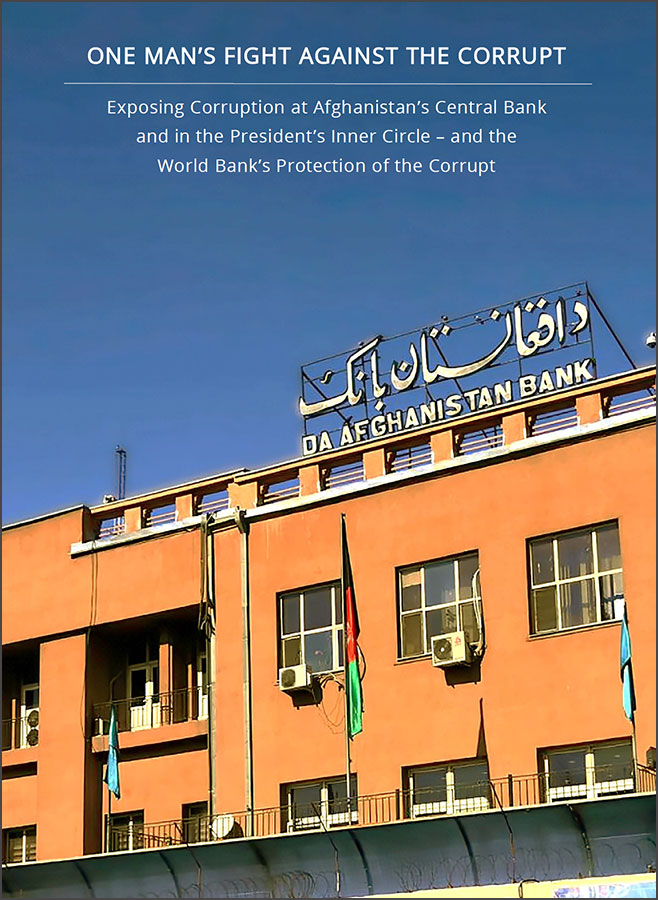
It begins at Afghanistan’s central bank. Unicon signed a World Bank-financed contract with Da Afghanistan Bank (DAB), where bidders had been told by both DAB and the World Bank to include office rent in their budgets. Later, DAB provided office space, food, and utilities itself – but refused reimbursement, turning that existing budget line into a kind of moral debt it could hold over the firm. The atmosphere darkened. The Governor publicly called one of Unicon’s experts – former U.S. Treasury staff – “a pig” for eating DAB’s food without pay. Obstacles to contract implementation followed immediately. Then came the demand: $350,000 in bribes as the price of peace. Unicon refused, and harassment became daily. Trying to clear the debt that officials had weaponised against it, the firm paid the office-rent amount of $48,000 through bank details supplied in writing by DAB’s own authorised contract official. That same payment would later be mischaracterised as evidence of corruption against the whistleblower. When the Sanctions Board reviewed it years later, it found the payment to be innocent and blamed the Bank’s investigators for ignoring and suppressing the facts surrounding it.
Then comes the London set-piece. When Unicon formally reported the extortion, DAB did not open a genuine inquiry. Instead, its First Deputy Governor urgently flew from Kabul to Washington to London for a private meeting with Unicon in a Costa café – after holding consultations with the World Bank in Washington. He presented two options: pursue the complaint and watch the project die, or withdraw it and let DAB’s Executive Board take direct control, stop the harassment, and salvage the contract for the benefit of all Afghans. Unicon, still trying to save the work and the development reforms, agreed to withdraw. Within days, the promises unravelled. The supposed protection vanished and the harassment intensified.
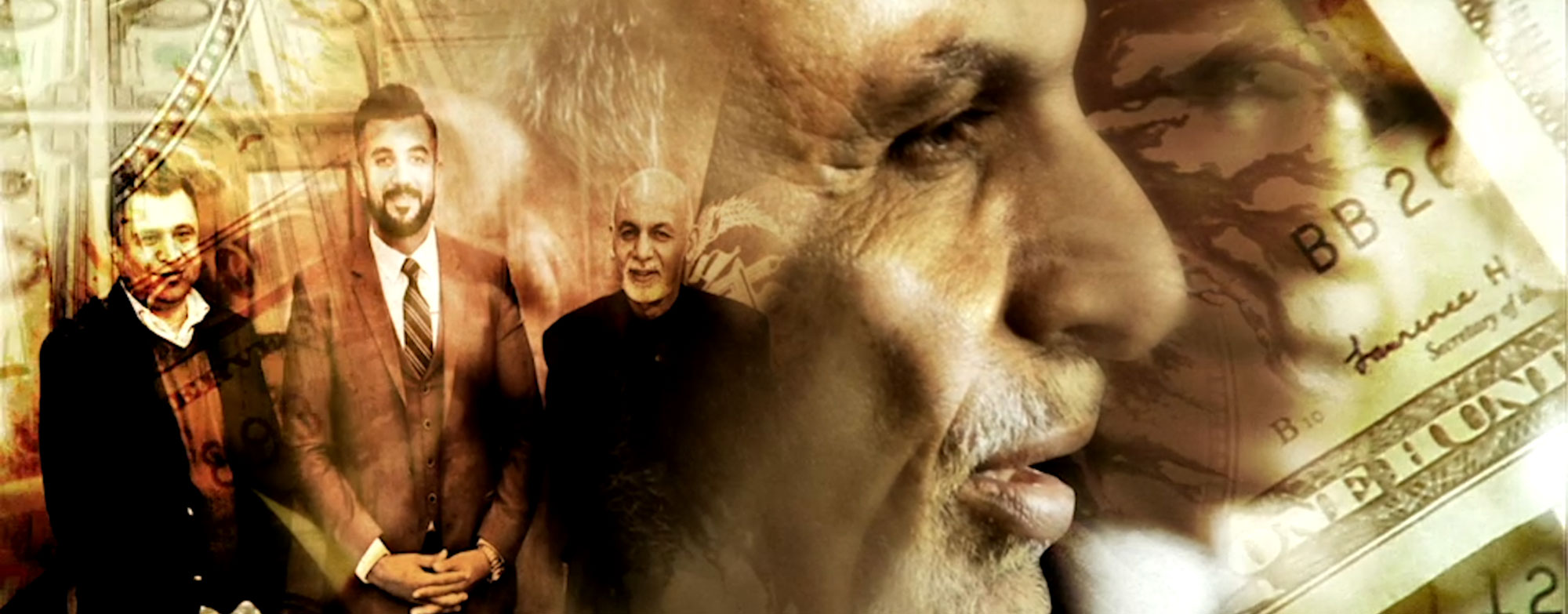
Then the story widens. The DAB affair does not remain a central-bank scandal. It begins to intersect with a second World Bank-financed energy saga involving the Sheberghan gas pipeline project, where Unicon was again extorted and again refused to pay bribes – this time in a scheme reaching into the Ghazanfar network and President Ghani’s inner circle. As Unicon moved to expose corruption within President Ghani’s office, which also touched major World Bank Group commercial interests, the $48,000 story became useful precisely because it could be turned into a weapon against a firm now making evidence-based disclosures far beyond DAB. The central-bank case was no longer just about DAB. It became part of a broader effort to discredit the messenger before its evidence about politically connected corruption at the highest levels in Afghanistan could harden into public record and legal consequence.
That is where the World Bank moves from observer to protagonist. After Unicon began putting evidence on record implicating senior Afghan state officials, the Bank’s Integrity Vice Presidency (INT) stopped behaving like a neutral investigator and started behaving like a combatant. DAB’s Governor and First Deputy Governor sent the Bank materials advocating that the $48,000 payment was a bribe and explicitly urged that Unicon be publicly sanctioned for it. When Unicon informed the Bank’s investigators that it was placing evidence implicating President Ghani’s circle onto the legal record, they responded not with questions but with allegations designed to stop Unicon. As Unicon resisted, the campaign widened into economic warfare – contracts derailed and blocked globally, informal and formal suspensions imposed, and a deliberate campaign to starve the firm financially before any tribunal could fully test the allegations. The strategy was simple: deprive the firm of economic oxygen so it dies, cannot defend itself, and its story is never told.
Running alongside all this is a sub-story that makes the report hard to put down: while the Bank was pursuing sanctions against Unicon, international arbitral tribunals were ruling in Unicon’s favour elsewhere. One tribunal in Paris under the International Court of Arbitration and another in The Hague under the Permanent Court of Arbitration both found that Afghan officials had retaliated against Unicon by withholding its payments after it refused to pay bribes, and ordered the release of funds. Those funds remained with the World Bank. These parallel rulings matter because they reveal the broader stakes. This is not only a story of reputational warfare. It is the story of an institution that had financial and political reasons to see the whistleblower discredited, weakened, and destroyed – and acted on them.
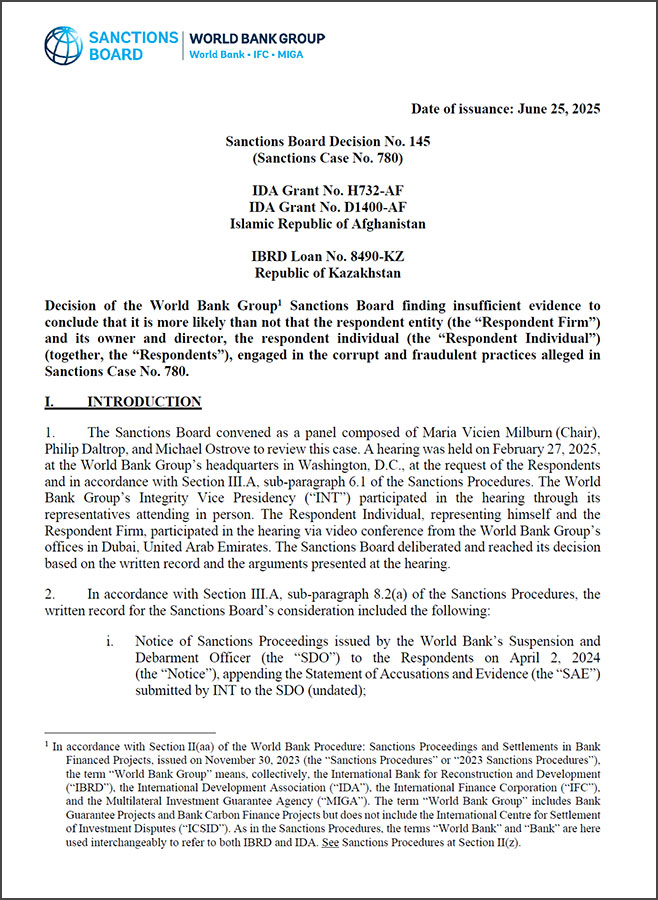
On 25 June 2025, the Sanctions Board cleared Unicon of every allegation and terminated all proceedings. The decision is unprecedented in the Bank’s history for the weight and directness of its criticism: thirteen separate statements characterising the Bank’s evidence and conduct as “disingenuous,” “deeply troubling,” marked by “troubling lapses in judgment,” “materially deficient,” and relying on reasoning “based on mere speculation.” The Board printed the Russian letter’s original text alongside INT’s mistranslation and the correct version – side by side, in the public decision itself – so that anyone could see the evidence tampering with their own eyes. The Board noted six times that it lacked jurisdiction to sanction Bank staff for the misconduct it had witnessed. Each repetition reads less like a procedural disclaimer and more like a signal to the Bank’s management that what the Board had seen demanded action it could not itself impose. Days after publishing their decision, the Board’s Chair made that warning publicly:
International organizations have been conferred privileges and immunities to perform their functions by their founding treaties. These immunities are necessary and essential for the independent performance of their mandates. That said, organizations are also required to provide accountability mechanisms … to ensure accountability and the fair resolution of disputes.
– Judge Maria Vicien Milburn, Chair of the Sanctions Board, World Bank Group
Unicon won arbitrations. It won before the World Bank’s own Sanctions Board. The arbitral tribunals confirmed it was a victim of state-sponsored extortion. And yet Unicon no longer exists. The legal victories came after the commercial destruction was complete. The firm that refused to pay bribes at Afghanistan’s central bank, in the President’s inner circle, across multiple ministries and multiple countries – the firm that documented everything, pursued every legal avenue, and ultimately exposed prosecutorial fraud inside a Washington institution claiming global immunity – did not survive the fight. The epilogue states it plainly: the hero dies; the villain survives. But the record escapes.
_____________________
Documents: